Can you use ceiling paint on walls? In some cases, yes, but the better question is how the product is designed to perform on a vertical surface. Ceiling and wall paints can differ in sheen, washability, spatter control, colour options, and intended use, so the label and product data should guide the decision.
For a low-contact closet or utility space, a ceiling paint may be acceptable if the manufacturer allows it. For living rooms, hallways, kitchens, bathrooms, and other walls that need regular cleaning, a wall coating is usually the more practical choice.
What Makes Ceiling Paint Different?
Ceiling paint is designed for overhead application, but the exact formula varies by product. Many ceiling paints are flat or very low sheen because that finish reflects less light and can make small surface irregularities less noticeable.
Some ceiling products are also formulated to reduce spatter or improve overhead application. Those traits do not automatically make every ceiling paint thicker, faster drying, lower in VOCs, or less durable than every wall paint.
The label is the best place to check intended surfaces, sheen, coverage, dry time, recoat time, and cleaning guidance.
Can You Use Ceiling Paint on Walls?
Yes, if the product is approved for wall use and the finish fits what you need from the room. The main tradeoff is usually not basic adhesion. It is how the wall looks and how easy it is to maintain.
A flat ceiling paint can work in a space that sees little contact. On walls that collect fingerprints, scuffs, cooking residue, or moisture, a wall paint with the right washable finish is often a better fit.
If you are comparing sheen choices, our guide to satin paint versus matte paint explains how appearance and cleaning needs change as sheen changes.
Where Ceiling Paint on Walls May Make Sense
Ceiling paint can be a reasonable option in a few situations, especially when the wall will not see much contact and the product label allows vertical use.
Even in those spaces, check the product instructions before using leftover ceiling paint. A can being available does not make it the right coating for every surface.
Where Wall Paint Is Usually the Better Choice
Rooms that see regular touching, wiping, moisture, or traffic usually benefit from a wall coating selected for those conditions.
That does not mean every wall needs a shiny finish. Modern wall paints are available in matte, eggshell, satin, and other sheens, with different levels of washability depending on the product.
Can You Use Wall Paint on a Ceiling?
Wall paint can be used on a ceiling when the coating is suitable for the surface and the sheen works for the room. It is not automatically the wrong product.
The bigger question is appearance. A higher-sheen wall paint can reflect more light and make ceiling patches, drywall seams, or roller texture easier to see. A flat wall paint may behave much more like a traditional ceiling finish.
Application also varies by formula, so do not assume every wall paint will drip more or every ceiling paint will apply more cleanly. Check the specific product before deciding.
What About Bathrooms and Kitchens?
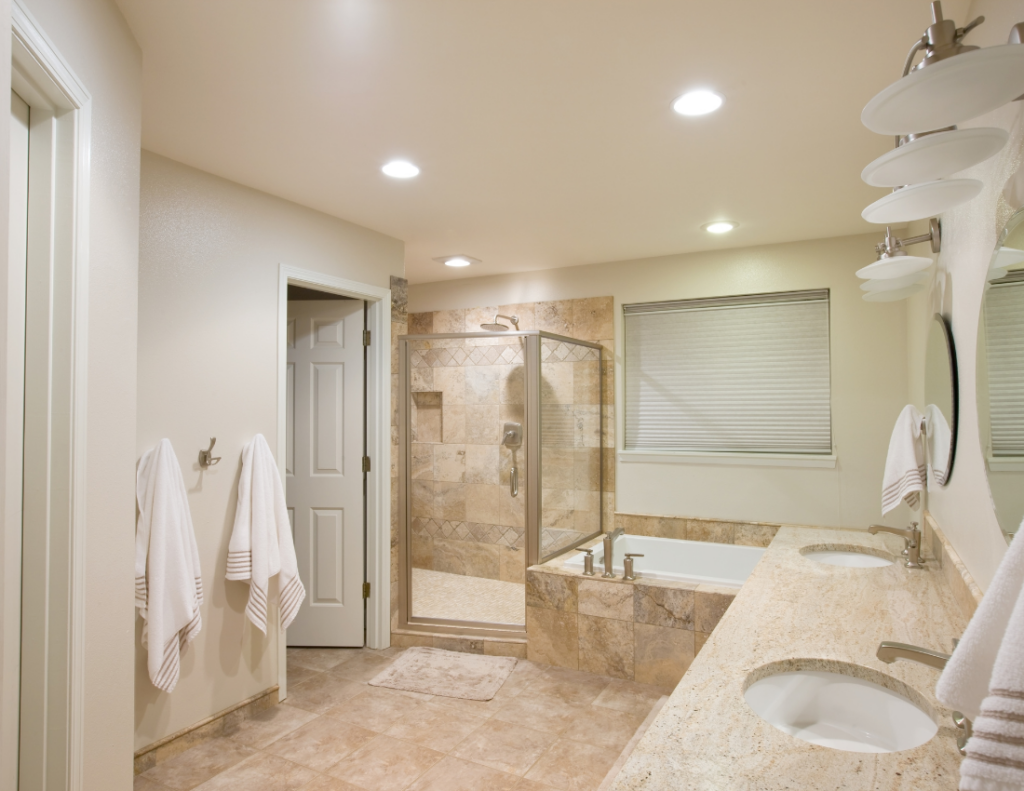
Bathrooms and kitchens need more thought because the walls may be cleaned more often and exposed to moisture, cooking residue, or splashes.
Use a coating that the manufacturer lists for the room and surface. The finish should match the cleaning and moisture demands of the space instead of relying on the words “ceiling paint” or “wall paint” alone.
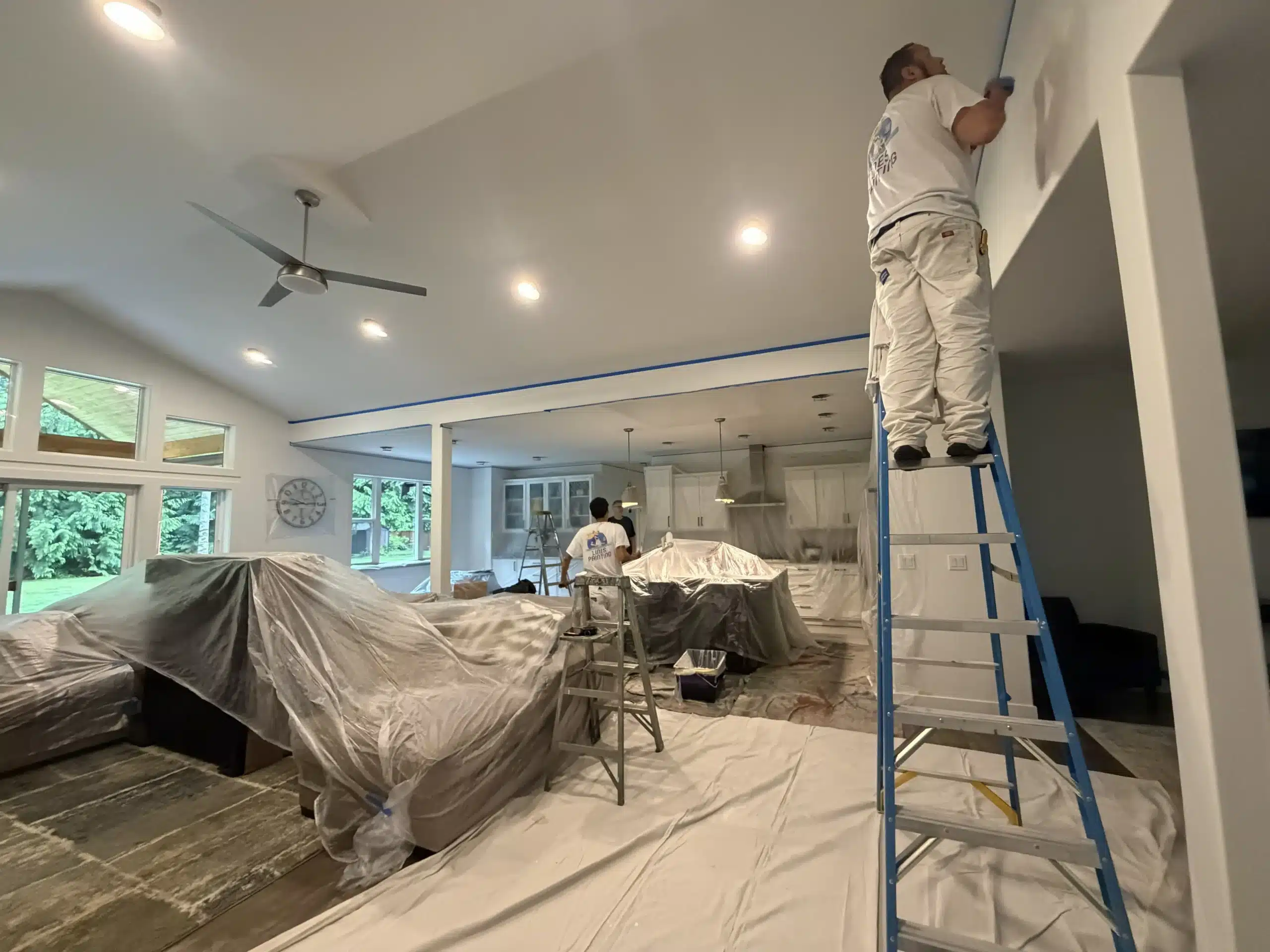
Lines Painting provides ceiling, wall, trim, cabinet, and other interior painting services across Bellevue and the Greater Seattle area, so the coating can be selected around each surface rather than treating the whole room the same.
Can Ceiling Paint Be Used as Primer?
Do not assume ceiling paint can replace primer. Paint and primer are designed for different purposes, even when both look similar in the can.
A previously painted wall in sound condition may not need a separate primer at all, while bare drywall, stains, repairs, glossy surfaces, or major colour changes may call for a specific primer.
Our Paint Primer 101 guide covers common situations where primer may be part of the system.
Read the Label Before Reusing Leftover Paint
If you already have ceiling paint left over, check the label before moving it to the walls. Look for approved surfaces, sheen, cleaning instructions, dry and recoat times, and any room-specific limitations.
For indoor projects, also follow the safety directions on the product. The EPA recommends increasing ventilation when using products that emit VOCs and following label precautions.
That guidance applies to paints and coatings generally. It does not mean one ceiling paint automatically has more or fewer VOCs than one wall paint.
Interior Painting With Lines Painting
Lines Painting serves Bellevue, Seattle, Kirkland, Woodinville, Edmonds, Redmond, and other communities across the Greater Seattle area.
The company offers free estimates, daily project communication, interior wall and ceiling painting, prep work, trim painting, cabinet painting, and other residential interior services. Lines Painting is locally owned and operated, and its current site lists licensed and insured service.
Current pricing information lists a three-year workmanship warranty for interior painting projects. Exact warranty terms for a specific project are provided with the estimate.
Frequently Asked Questions About Ceiling Paint on Walls
Can you use ceiling paint on walls?
Yes, in some situations. Check that the product allows wall use and that its sheen and cleaning performance fit the room.
Is ceiling paint less washable than wall paint?
Many flat ceiling paints are not designed for frequent scrubbing, but washability varies by product. Check the manufacturer's cleaning guidance instead of relying only on the product category.
Can wall paint be used on a ceiling?
Yes, when the coating is suitable for the surface. A higher sheen may make ceiling imperfections more visible, so appearance should be considered along with application.
Can ceiling paint be used as primer?
Do not treat ceiling paint as a universal primer substitute. Primer needs depend on the substrate, repairs, stains, existing finish, and coating system.
What paint finish is best for interior walls?
There is no single finish for every room. Matte or eggshell can work well in lower-contact spaces, while more washable finishes may fit kitchens, bathrooms, hallways, and other frequently cleaned areas.