Sustainable painting practices get talked about a lot. But what do they really mean for your home, your health, and the environment?
It is more than buying a can labeled eco-friendly. Sustainable painting practices involve the type of paint, how surfaces are prepared, how waste is handled, and how long the finish lasts. When done correctly, the results look great and hold up longer, which reduces repaint cycles and material waste.
Key Takeaways:
Why Sustainable Painting Practices Go Beyond The Paint Can
Most people think sustainability starts and ends with low-VOC acrylic paint. That is part of it. However, sustainable painting practices look at the entire system.
For example, exterior paint types vary in how they perform on siding, stucco-type finish, brick, and concrete. If the wrong coating is used, the paint can fail early. That leads to more sanding, more primer, and another coat sooner than expected.
On the other hand, when the right exterior house paint types are selected for the surface, adhesion improves and the finish lasts longer. That reduces material usage over time. It is a simple shift in thinking, but it makes a measurable difference.
Low VOC Paint And Indoor Air Quality
Low VOC paint reduces the amount of volatile organic compounds released into the air during and after application. Traditional oil based products can release stronger fumes and higher chemical levels. Modern latex and acrylic paint options have improved dramatically.
Many homeowners prefer:
- Low odor formulas
- Water-based latex for interior walls
- Environmentally friendly coatings with lower emissions
Sheens also matter. Satin, eggshell, and gloss finishes all reflect light differently and impact durability. For high moisture spaces, selecting the correct sheen helps prevent mildew and premature wear.
Durability Is Part Of Sustainability
Here is something that often gets missed. The most sustainable painting project is the one that lasts.
High-quality exterior paint types, including premium acrylic paint systems, offer better adhesion on wood, masonry, siding, and even exterior metal door surfaces. Products designed for painting exterior metal door applications contain additives that resist rust and improve bonding.
When coatings fail early, you see:
- Peeling
- Blistering
- Fading color
- Moisture intrusion
That leads to additional prep, sanding, and another coat much sooner than expected. Sustainable painting practices reduce that cycle by prioritizing long-term performance.
For example, Sherwin-Williams exterior paint types are often engineered for specific climates. Using the right system for your roof line, porch, or brick exterior matters more than simply choosing a popular brand.
Surface Preparation Makes Or Breaks The Finish
Prep work is where sustainable painting practices either succeed or fail.
Before a new coat goes on, surfaces should be:
- Cleaned of dirt and mildew
- Scraped or sanded where needed
- Primed appropriately
- Sealed with caulk at gaps and joints
Using the right primer improves adhesion and reduces future peeling. If you skip this step, even the best acrylic paint can struggle.
Exterior surfaces like stucco-type finish, concrete, and masonry require primers designed to bond properly. In some cases, specialized products for external paint types are needed to handle moisture and expansion.
This is where experience matters. The right prep extends the lifespan of the entire system.
Waste Reduction And Responsible Disposal
Sustainable painting practices also include what happens after the project is complete.
Leftover paint should not be poured down drains or dumped in soil. Many states have recycling programs that collect unused paint for reprocessing. Proper storage for future touch-ups also reduces unnecessary purchases.
Smart material planning helps prevent excess waste:
- Accurate measurement of square footage
- Correct estimation of coats
- Using reusable drop cloths
- Recycling empty metal cans
Even small steps like this add up. Less waste means fewer materials in landfills and fewer resources consumed overall.
Choosing The Right Products For Each Surface
Different surfaces demand different solutions.
Decks and porches benefit from selecting the correct types of deck stain rather than standard exterior paint. Stains penetrate wood fibers differently and allow the surface to breathe.
Exterior siding may require satin or eggshell finishes depending on exposure and desired sheen. High gloss is sometimes used on trim for durability, but gloss also highlights imperfections.
Concrete and masonry surfaces need coatings that allow vapor to escape while still protecting against water intrusion. When coatings trap moisture, they can blister and lose adhesion. That is why sustainable painting practices are about systems, not shortcuts.
Sustainable Painting Practices That Stand The Test Of Time
Sustainable painting practices are about more than labels. They focus on low-volatile organic compound coatings, strong adhesion, and finishes that hold up against weather and wear.
When the right exterior house paint types are paired with proper primer and preparation, the coating lasts longer. That means fewer repaint cycles and less waste. Responsible disposal and material planning also reduce environmental impact in practical ways.
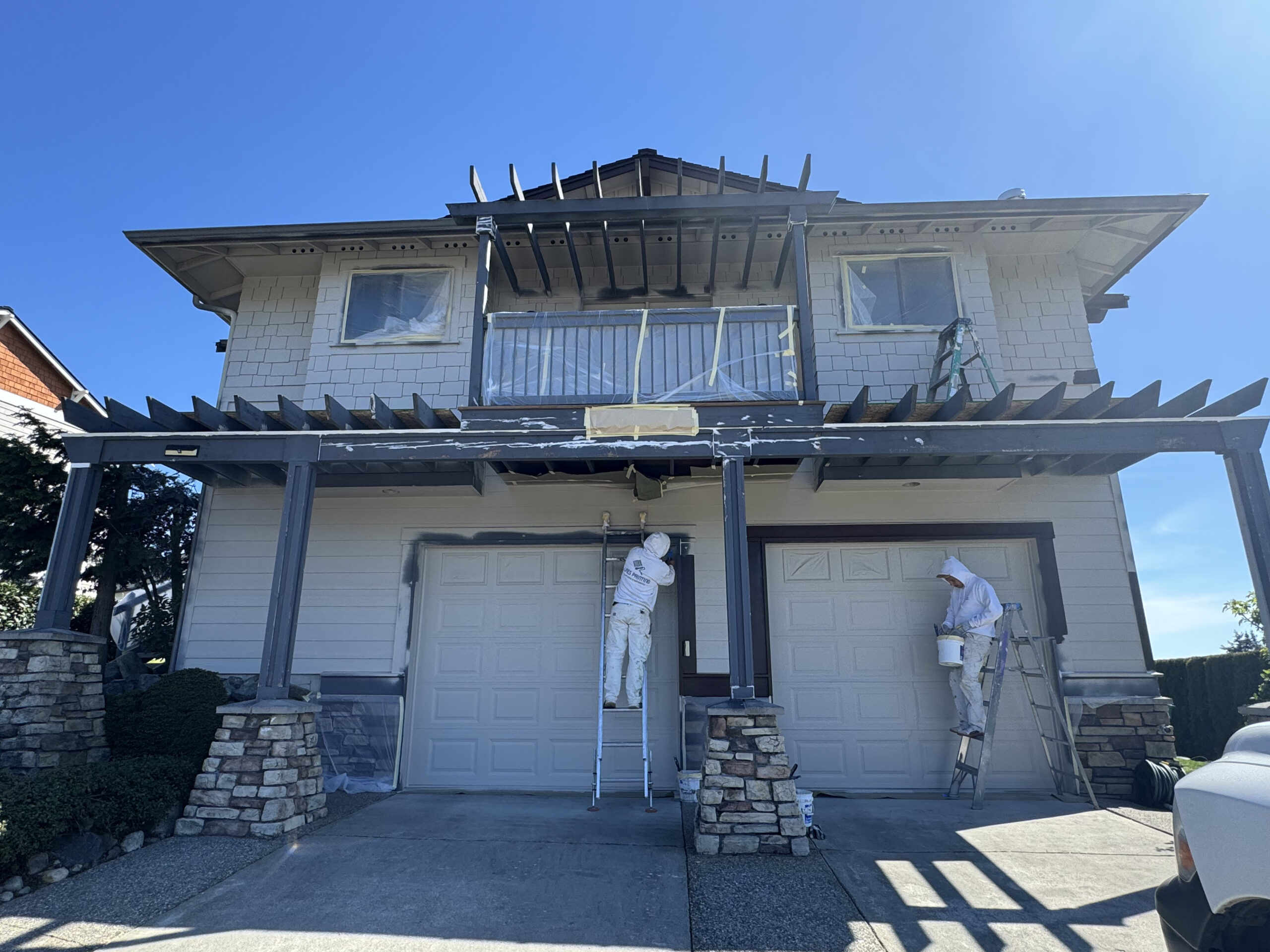
At Lines Painting, we apply sustainable painting practices through a clear process:
- Detailed surface evaluation
- Proper cleaning, sanding, and priming
- Selection of high-performance acrylic paint systems
- Careful coat application for even coverage
- Thoughtful material planning to reduce waste
If you are looking for long-lasting results that align with sustainable painting practices, we are ready to help.
Call us at 425-534-7117 for a FREE estimate and learn how Lines Painting approaches each project with durability and responsibility in mind.