You reach out to 3 painters. The quotes come back and the spread is wider than you expected. One is $3,500. Another is $7,800. A third lands somewhere in the middle. All 3 are painting the same house.
If that range feels frustrating, it is because nobody explained the variables. What affects exterior painting cost is not a mystery, but it does require knowing which factors actually move the needle and which ones are just noise. In the Pacific Northwest, a few of those factors carry more weight than they would almost anywhere else in the country.
Here is what is actually behind every number on every estimate you receive.
Key Takeaways
Square Footage and Surface Area: Where Every Quote Begins
Every exterior estimate starts with how much surface the painters need to cover. More square footage means more product and more time on site. That baseline is consistent across every painter you call.
What most homeowners do not realize is that square footage is not the same as paintable surface area. Trim boards, window casings, fascia, soffits, gutters, downspouts, garage doors, and front doors all add to the total. Homes with more architectural detail take longer to complete than a similar-sized home with a flat, clean exterior profile.
The older housing stock in Seattle neighborhoods like Edmonds, Bellevue, and Kirkland often features more detailed woodwork than newer construction, which adds time and careful hand work to any exterior project.
Seattle’s Climate and What It Does to the Cost Conversation
This is where the Pacific Northwest changes the calculus. Seattle averages around 38 inches of rain annually, and that persistent moisture puts exterior paint under stress in ways that most general guides do not account for.
Paint that is not applied correctly, or that was applied over a surface that was not fully dry or properly prepped, lets moisture in at the film edge. Once moisture gets behind the paint film, it drives peeling from the inside out. In Seattle’s climate, that process moves faster than it would in a drier region.
That is why prep work here tends to be more involved, and why what affects exterior painting cost in this market often comes down to how thoroughly painters handle the surface before a single coat goes on.
What Affects Exterior Painting Cost Most: Surface Condition and Prep
Surface preparation is where the real price difference between estimates usually lives. The condition your home is in before painters arrive determines how long the prep phase runs, and prep is pure labor cost.
Homes across the greater Seattle area that have gone 7 to 10 years between repaints, or that have wood siding exposed to years of wet winters, frequently need more prep than a newer home with intact paint in good condition. The guide on how often wood siding needs repainting covers how Seattle’s weather cycle accelerates that wear and what to watch for before scheduling an estimate.
According to the Paint Quality Institute, surface preparation is one of the strongest predictors of how long an exterior project lasts. A well-prepped surface can add several years to paint life compared to one that was rushed.
Common prep items that add time and cost to any exterior quote include:
- Pressure washing to clear mold, mildew, algae, and chalk buildup
- Scraping and sanding sections where paint is peeling or failing
- Re-caulking around windows, doors, trim joints, and any wall penetrations
- Spot priming bare wood, repaired areas, or previously stained surfaces
- Minor wood replacement on trim sections that have softened from moisture exposure
Ask every painter what prep is included in the base quote and what is priced separately. That one question tells you a lot about how complete any estimate actually is.
Paint Quality and the Real Math Behind Product Selection
Paint is a direct line item in any exterior quote. But comparing quotes purely on price per gallon misses the more useful calculation: cost per year of protection.
Budget exterior paints use lower resin content per gallon. They cover adequately but break down faster under Seattle’s UV exposure during summer and its moisture load through fall and winter. Mold and mildew resistance also varies significantly between product grades, and in a wet climate, that difference becomes visible within 2 to 3 seasons on a lower-grade product.
Premium exterior paints are formulated with higher binder content, which produces better adhesion, superior moisture resistance, and a longer lifespan before the surface fails. Consumer Reports exterior paint testing has shown that top-rated exterior products can outlast budget alternatives by 5 to 7 years under real conditions. In Seattle, that gap is at the higher end of that range.
For a full picture of what exterior projects cost in the Seattle area, before you start comparing estimates, the breakdown on exterior painting costs gives you realistic numbers alongside what is driving them.
Coat Count and How Color Decisions Affect Price
Most exterior projects are quoted with 2 coats of finish paint. Certain conditions push that number to 3, and the added material and labor show up in the estimate.
A significant color change is one of the more common reasons coat count increases. Going from a deep charcoal to a soft white, or making any dramatic shift between light and dark, almost always requires additional coats for full, even coverage. If you are considering a bold new palette, the guide on two-toned exterior color combinations gives useful context on how color scope decisions play out in practice.
Bare wood sections, freshly primed areas, and porous or heavily weathered siding also absorb the first finish coat more aggressively than a sound, painted surface would. That absorption increases material consumption and often requires an additional coat to reach the right coverage.
Painters should be able to tell you exactly how many coats are in their quote and the reason behind that number. Reducing coat count to lower a bid is one of the more predictable ways a project falls short of expectations within the first few years.
Access, Height, and Trim Complexity
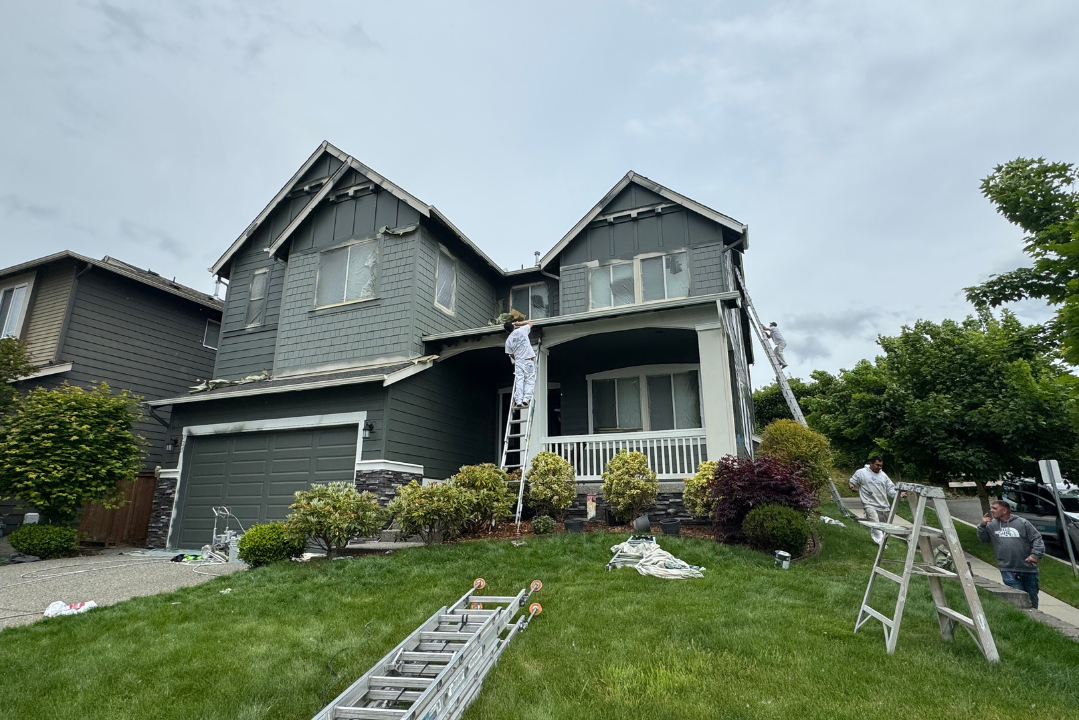
Not every part of a home is equally easy to reach, and the harder sections cost more to complete correctly. Multi-story homes, steeply pitched rooflines, and sections that require scaffolding or lift equipment add real setup and equipment cost to any exterior project.
Trim complexity adds a separate layer. Detailed window casings, layered moldings, and decorative woodwork all require slow, careful hand application that takes significantly longer than rolling a flat wall section. That time is labor, and labor is cost.
For homes in areas like Edmonds, WA, where older Craftsman and Victorian-era homes are common, both access and trim complexity can be meaningful factors in why quotes run higher than on newer construction with simpler profiles.
Reading Your Estimates More Clearly
With these variables in hand, you can look at any exterior quote and ask the right questions. What prep is included? How many coats? What product grade? How is trim priced relative to flat siding?
A quote that answers those questions clearly is a complete estimate. One that leaves them vague is almost certainly cutting something, and in Seattle’s climate the things that get cut tend to show up fast.
At Lines Painting, we walk through every one of these factors with you before any number goes on paper. In an industry where unclear estimates are the norm, we think you deserve to know exactly what you are paying for and why.
Call us for a FREE estimate today and get a clear, honest breakdown of what your exterior project actually needs.